About Me
I am a senior undergraduate student in the Department of Computer Science and Technology at Tsinghua University, advised by Prof. Jun Zhu and Prof. Hang Su in the TSAIL group. In summer 2026, I was a visiting research student in Prof. Jeannette Bohg’s Interactive Perception and Robot Learning Lab (IPRL) at Stanford through the Undergraduate Visiting Research (UGVR) Program.
My research is in embodied AI, with a focus on world action models, which learn from large-scale video how the world evolves and how a robot should act, so that robots can pick up general-purpose skills.
Outside of research, I enjoy playing basketball, and I have also learned Wing Chun and ballroom dance.
News
- 2026.06 Visited Stanford IPRL for summer research through the UGVR 2026 program.
Selected Publications
CVPR 2026
While a general embodied agent must function as a unified system, current methods are built on isolated models for understanding, world modeling, and control. This fragmentation prevents unifying multimodal generative capabilities and hinders learning from large-scale, heterogeneous data. In this paper, we propose Motus, a unified latent action world model that leverages existing general pretrained models and rich, sharable motion information. Motus introduces a Mixture-of-Transformer (MoT) architecture to integrate three experts (i.e., understanding, video generation, and action) and adopts a UniDiffuser-style scheduler to enable flexible switching between different modeling modes (i.e., world models, vision-language-action models, inverse dynamics models, video generation models, and video-action joint prediction models). Motus further leverages the optical flow to learn latent actions and adopts a recipe with three-phase training pipeline and six-layer data pyramid, thereby extracting pixel-level "delta action" and enabling large-scale action pretraining. Experiments show that Motus achieves superior performance against state-of-the-art methods in both simulation (a +15% improvement over X-VLA and a +45% improvement over Pi0.5) and real-world scenarios(improved by +11~48%), demonstrating unified modeling of all functionalities and priors significantly benefits downstream robotic tasks.
Copy
@misc{bi2025motusunifiedlatentaction,
      title={Motus: A Unified Latent Action World Model},
      author={Hongzhe Bi and Hengkai Tan and Shenghao Xie and Zeyuan Wang and Shuhe Huang and Haitian Liu and Ruowen Zhao and Yao Feng and Chendong Xiang and Yinze Rong and Hongyan Zhao and Hanyu Liu and Zhizhong Su and Lei Ma and Hang Su and Jun Zhu},
      year={2025},
      eprint={2512.13030},
      archivePrefix={arXiv},
      primaryClass={cs.CV},
      url={https://arxiv.org/abs/2512.13030},
}arXiv preprint, 2026
Vision-Language-Action (VLA) models generalize semantically well but often lack fine-grained modeling of world dynamics. We present Motubrain, a unified World Action Model that jointly models video and action under a UniDiffuser formulation with a three-stream Mixture-of-Transformers architecture. A single model supports policy learning, world modeling, video generation, inverse dynamics, and joint video-action prediction, while scaling to heterogeneous multimodal data such as video-only, task-agnostic, and cross-embodiment robot data. Building on Motus, Motubrain further introduces unified multiview modeling, an independent text stream for stronger language-action coupling, a shared cross-embodiment action representation, and an efficient post-training and deployment recipe for long-horizon real-world control. Our inference stack combines step reduction, compilation, FP8 quantization, DiT caching, V2A-style action-only inference, and real-time chunked closed-loop execution, achieving over 50x speedup over a naive baseline and up to 11 Hz inference. Experimentally, Motubrain achieves 95.8% and 96.1% average success on RoboTwin 2.0 under clean and randomized settings, respectively, attains the strongest reported EWMScore in our WorldArena comparison, and adapts to new humanoid embodiments with only 50–100 trajectories. These results show that unified world action models can scale in generality, predictive accuracy, and real-world deployability.
Copy
@misc{motubrainteam2026motubrainadvancedworldaction,
      title={Motubrain: An Advanced World Action Model for Robot Control},
      author={Motubrain Team and Chendong Xiang and Fan Bao and Haitian Liu and Hengkai Tan and Hongzhe Bi and James Li and Jiabao Liu and Jingrui Pang and Kiro Jing and Louis Liu and Mengchen Cai and Rongxu Cui and Ruowen Zhao and Runqing Wang and Shuhe Huang and Yao Feng and Yinze Rong and Zeyuan Wang and Jun Zhu},
      year={2026},
      eprint={2604.27792},
      archivePrefix={arXiv},
      primaryClass={cs.RO},
      url={https://arxiv.org/abs/2604.27792},
}
arXiv preprint, 2026
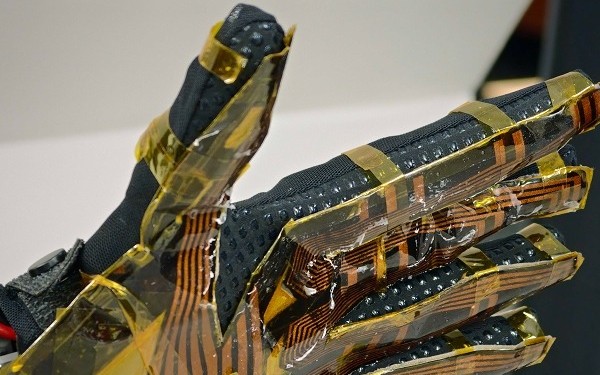
A growing body of work suggests that tactile sensing gives robot policies contact information that complements vision in dexterous manipulation. However, visuo-tactile robot data remains scarce: dexterous demonstrations require teleoperating robots, which limits dataset scale. Human demonstrations are far cheaper to collect and offer a path to scaling this data, but only if human and robot hands carry tactile sensors with corresponding signals. This requires sensors that conform to different hand geometries, cover the full hand, and share a common layout across embodiments. We present SoTa, a low-cost capacitive tactile skin that provides full-hand coverage on humans and robots while preserving a shared layout of 202 taxels across corresponding finger and palm regions. Our multilayer design with fabric electrodes enables in-house fabrication of thin, soft skins with customizable geometry for under $10 in materials per skin. The sensor retains over 97% of its initial response span after 10,000 loading-unloading cycles with traces retaining continuity through 1,280 tight-fist folding cycles. The shared taxel layout supports human-robot co-training with a common tactile encoder and no learned cross-sensor mapping. Across three contact-rich manipulation tasks, tactile observations improve in-distribution success over vision-only policies. With a fixed robot-demonstration budget, adding human demonstrations more than doubles mean success across eight evaluation conditions, from 22.8% to 45.9%, improving success in all five out-of-distribution conditions. We plan to open-source the fabrication process, hardware, and firmware.
arXiv preprint, 2026
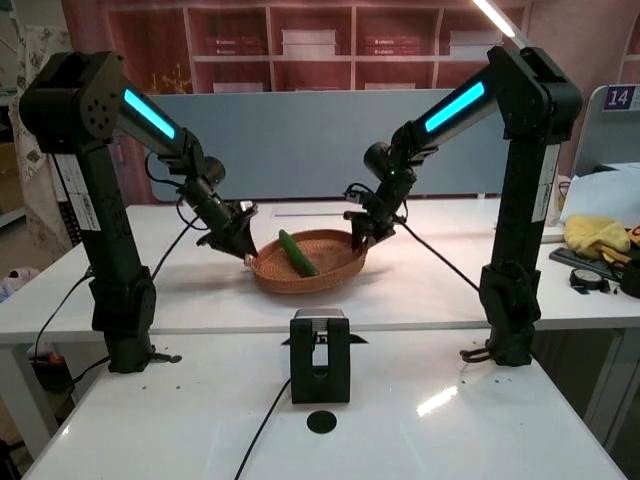
General embodied agents should perceive, predict, act, evaluate, and improve within a unified system. World models have shown great promise in building such agents, yet existing models typically append an action output head to a world simulator, without coupling them into a closed decision-and-learning loop for policy improvement. We present Motus2, a self-evolving general world model for dexterous manipulation. Motus2 advances world modeling through model scaling and data scaling. For model scaling, a single model with shared weights exposes three control interfaces: a policy (world-action model), a simulator (action-conditioned world model), and an evaluator (value model). The policy proposes candidate action chunks, the simulator predicts their visual consequences, and the evaluator assesses the predicted outcomes. Their coupling forms a closed decision-and-learning loop for policy improvement. This formulation uses curated expert demonstrations for action learning, while failed and suboptimal interactions provide valuable evidence for dynamics modeling and value learning. For data scaling, Motus2 progresses from large-scale monocular egocentric data to synchronized stereo egocentric data, followed by robot-domain adaptation with robot trajectories and supplementary human-robot alignment data. Motus2 further studies global-autoregressive and hybrid-memory extensions of its sliding-window context, adds tactile feedback for contact-aware control, and is instantiated on a fully biomimetic platform with stereo vision, dual arms, dual dexterous hands, and tactile sensing. Together, egocentric data scaling and closed-loop general world model scaling provide a general path toward self-evolving dexterous manipulation.
Copy
@misc{bi2026motus2,
  title         = {Motus2: A Self-Evolving General World Model for Dexterous Manipulation},
  author        = {Hongzhe Bi and Zihao Zhou and Yihang Tang and Jingrui Pang and
                   Shuhe Huang and Haitian Liu and Runqing Wang and Shuai Huang and
                   Yichen Wang and Yiming Cheng and Ruowen Zhao and Zhenghua Li and
                   Hengkai Tan and Xiaolong Liu and Jinhui Wan and Jiabao Liu and
                   Min Zhao and Fan Bao and Jun Zhu},
  year          = {2026},
  eprint        = {2608.30237},
  archivePrefix = {arXiv},
  primaryClass  = {cs.RO},
  url           = {https://arxiv.org/abs/2608.30237}
}
arXiv preprint, 2025
Robotic arm manipulation in data-scarce settings is a highly challenging task due to the complex embodiment dynamics and diverse contexts. Recent video-based approaches have shown great promise in capturing and transferring the temporal and physical interactions by pre-training on Internet-scale video data. However, such methods are often not optimized for the embodiment-specific closed-loop control, typically suffering from high latency and insufficient grounding. In this paper, we present Vidarc (Video Diffusion for Action Reasoning and Closed-loop Control), a novel autoregressive embodied video diffusion approach augmented by a masked inverse dynamics model. By grounding video predictions with action-relevant masks and incorporating real-time feedback through cached autoregressive generation, Vidarc achieves fast, accurate closed-loop control. Pre-trained on one million cross-embodiment episodes, Vidarc surpasses state-of-the-art baselines, achieving at least a 15% higher success rate in real-world deployment and a 91% reduction in latency. We also highlight its robust generalization and error correction capabilities across previously unseen robotic platforms.
Copy
@misc{feng2025vidarcembodiedvideodiffusion,
      title={Vidarc: Embodied Video Diffusion Model for Closed-loop Control},
      author={Yao Feng and Chendong Xiang and Xinyi Mao and Hengkai Tan and Zuyue Zhang and Shuhe Huang and Kaiwen Zheng and Haitian Liu and Hang Su and Jun Zhu},
      year={2025},
      eprint={2512.17661},
      archivePrefix={arXiv},
      primaryClass={cs.RO},
      url={https://arxiv.org/abs/2512.17661},
}
* Joint first authors / equal contribution · † Project lead · All papers on the Publications page and Google Scholar